
非常完美
国内首次!液体火箭发动机实现重复使用_我的网站

A |

B | 自由进出太空,是航天运输系统后续发展的主要方向,发展可重复使用航天运载器则是实现自由进出太空的关键环节。

C | 近年来,随着美国“猎鹰9号”火箭重复使用的成熟应用,各国已经掀起新一轮重复使用技术的发展热潮。

D | 而液体火箭发动机作为航天运载器的主要动力装置,具有功能全、性能高、任务适应强、技术难度大、研制周期长等特点,也是航天运载器最复杂的产品之一,其可重复使用成为实现航天运载器重复使用必须突破的关键技术之一。据介绍,该型液氧煤油发动机作为我国新一代运载火箭的主要动力装置,具有高性能、大推力、无毒无污染等优点。

E |
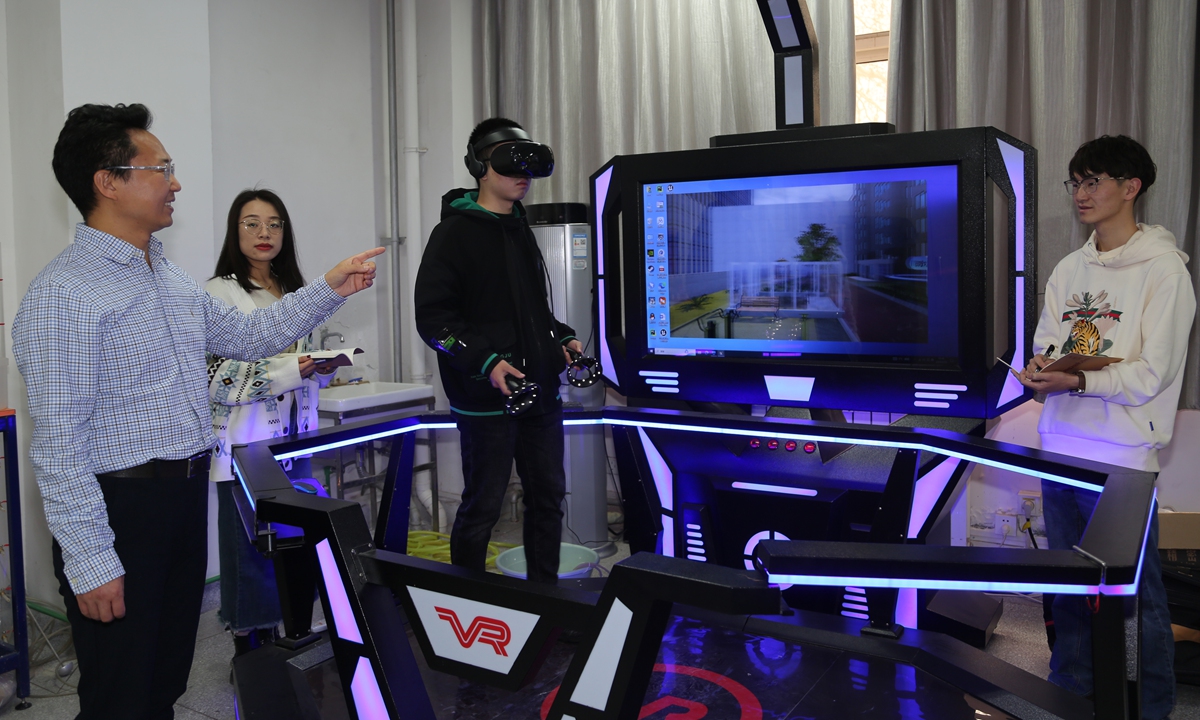
Extreme weather is increasingly a global challenge, and the key to addressing climate risks lies in earlier prediction, more precise action and smarter preparedness, with emerging technologies playing a vital role. The Global Times launches the "Climate Gambit" series, exploring how research teams are leveraging cutting-edge technologies, including artificial intelligence, high-performance computing and smart observation systems, to anticipate weather changes, enhance disaster early-warning and strengthen resilience against climate risks.
Inside a state key laboratory at Xi'an University of Technology, Northwest China's Shaanxi Province, there is a miniature but complete "water world" which simulated water channels, inland lakes and main rivers to recreate real flood scenarios and test their newly developed GPU Accelerated Surface Water Flow and Transport Model (GAST).
Known as a "super brain" for flood control, GAST can complete flood simulations involving more than 3 million computational units within 30 seconds, helping transform flood management from a reaction to emergency into active precautions since "flooding impacts can be predicted even before rainfall arrives."
At a time when extreme rainfall and summer flooding have become increasingly frequent, questions such as when the flooding will arrive, which roads may be submerged and when residents should evacuate have become increasingly important.
In an exclusive interview with the Global Times, Hou Jingming, a professor at Xi'an University of Technology and the leader of the research team, explained how the GAST model seeks to answer these questions by accurately predicting flood development and identifying vulnerable areas before disasters occur, and how the model helps authorities take preventive measures to reduce casualties and economic losses.
AI empowering 'flood drill'
The water tank system in the lab was designed to create a controllable, repeatable and observable environment to simulate complex hydrological processes, including river flooding, urban water level changes, lake regulation, drainage pump operations and coordinated flood-control measures.
By adjusting variations such as upstream water inflow, rainfall intensity, downstream water levels and drainage conditions, scientists can recreate different flood scenarios. Meanwhile, water levels, flow speeds and other data are collected in real time and displayed on a digital twin platform.
"If a rainstorm and corresponding floods are an exam, GAST is like a 'drill,'" Hou said. "It can simulate how floods develop, where water will flow, which areas may be inundated and when river levels may rise, ensuring authorities are well but not overly prepared."
To answer the public's concern about "whether my neighborhood will be flooded when heavy rain arrives," the team developed new algorithms for urban surface water flow, including improvements in terrain slope and friction calculations.
These breakthroughs have improved simulation accuracy in complex urban environments. Compared with extensive monitoring data, GAST can keep simulation errors of key hydrodynamic factors within 15 percent. This means the model can provide not only general flood trends, but also quantitative information such as water depth, flow speed and inundation areas.
Combined with AI technologies, it can identify complex relationships between rainfall, water conditions, flood depth, flow velocity and affected areas, cutting simulations from hours in traditional methods to minutes or even seconds.
The faster calculation capability means that once meteorological authorities update forecasts, the model can quickly estimate flood risks in different parts of a city.
"The earlier rainfall warnings are issued, the earlier we can identify potential flooding hotspots and high-risk areas," Hou said. "This saves valuable time for evacuation, traffic management and emergency deployment."
For smarter disaster response
Building an accurate flood prediction model also requires integrating large amounts of urban data other than weather forecasts, including urban terrain, drainage networks and infrastructure information.
For example, a model developed for Xi'an incorporates geographic data and drainage system information collected from relevant authorities and field surveys. After receiving rainfall forecasts, the system can quickly calculate possible flooding scenarios, showing when and where waterlogging may occur and highlighting vulnerable roads and areas through visual maps.
To demonstrate how the super brain works in case of possible flooding, the laboratory has set a virtual reality area where visitors can experience a simulated urban flooding evacuation in the Xiaozhai area of Xi'an. Wearing VR headsets, participants can see water levels gradually rising and follow emergency instructions to move toward higher ground.
The entire technological package has already been applied in real-world flood prevention.
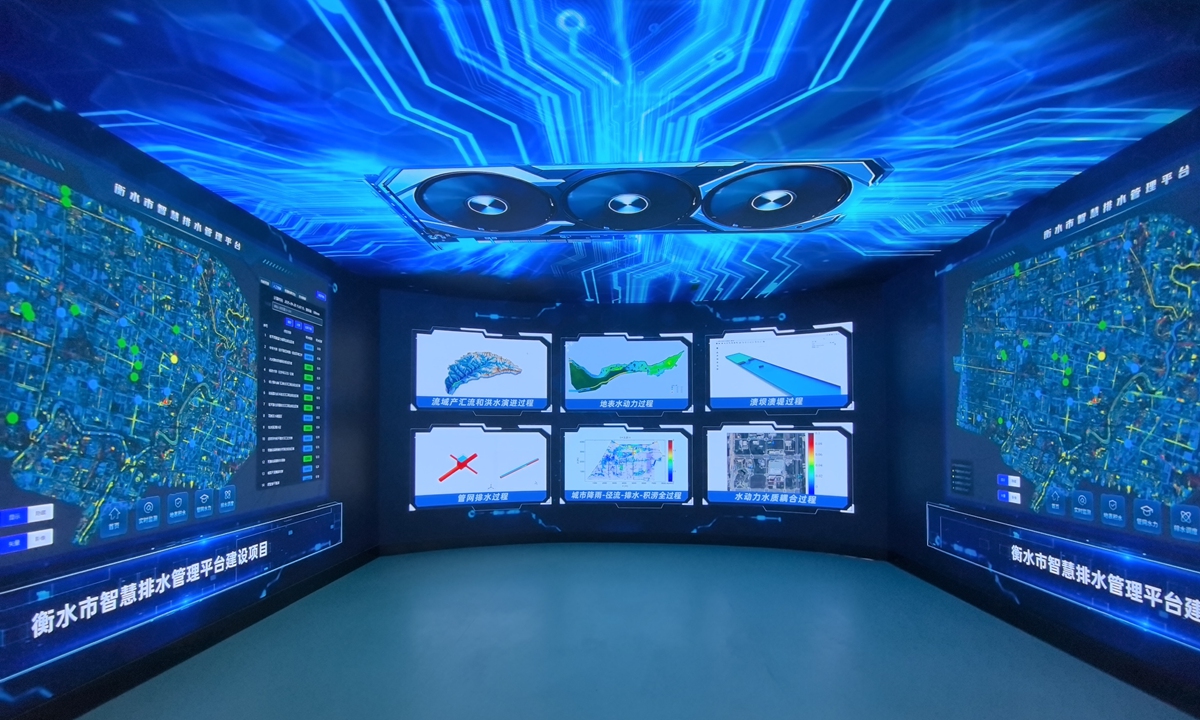
During Typhoon Muifa in 2022, Haishu district in Ningbo, East China's Zhejiang Province, recorded a regional rainfall of 367 millimeters. Using GAST as its core technology, the local flood forecasting platform integrated weather forecasts, AI algorithms and real-time monitoring data to provide rolling three-hour flood risk predictions.
Post-event assessments showed that predicted risks at most locations matched actual flooding conditions. The average relative error between predicted and observed maximum water depths was 13 percent.
The GAST model was also integrated into a smart rain and flood management platform in Qinhan new city area in Xianyang of Shaanxi, and during a rainstorm warning in July 2022, the platform provided continuous monitoring and forecasts. Based on the results, local authorities shifted from routine inspections to targeted monitoring of flood-prone areas and optimized emergency drainage operations.
The model is also being applied to mountain torrent prevention, as it can simulate rapidly changing flows in complex terrain and, combined with machine learning, complete forecasts within seconds. For reservoirs and rivers, it supports sudden and gradual dam-break simulations.
In June 2026, the model was presented at a national symposium on flood risk mapping achievements. The technology has since been applied by water resources, emergency management and urban development authorities, expanding from Shaanxi to multiple provinces and regions across China.
Looking ahead, the research team is developing a framework that further keeps up with the pace focusing on AI technologies. "Currently, the system operates based on weather forecast, therefore, AI will increase efficiency by using historical cases and real-time monitoring data to correct errors and update forecasts dynamically," Hou said.
。该发动机从设计之初,部组件方案及总体布局按多次工作的要求开展论证,地面研制试验实现了单台发动机不下台重复试车8次。然而,可重复地面试车并不代表着发动机可以适应可重复使用。

F | 液体火箭发动机可重复使用还需要突破多次起动、低入口压力快速起动、大范围推力调节、状态评估检测及健康管理、快速简化处理、高温组件结构抗疲劳寿命评估及延寿、全任务剖面复杂力热环境预示及控制等关键技术。据了解,该型发动机于2021年作为某飞行器主动力装置参加首飞试验,经检测维护后参加本次重复飞行试验任务。

G | 据公开报道,2021年7月16日,由航天科技集团一院研制的亚轨道重复使用演示验证项目运载器在酒泉卫星发射中心点火起飞,按照设定程序完成飞行后,平稳水平着陆于阿拉善右旗机场。

H | 今年的8月26日,该升力式亚轨道运载器的重复使用飞行试验获得圆满成功。飞行试验采用的运载器经健康检测维护后,在酒泉卫星发射中心再次点火垂直起飞,按照设定程序完成亚轨道飞行,平稳水平着陆于阿拉善右旗机场,成功实现我国亚轨道运载器的首次重复使用飞行。

I | 据介绍,此次完成重复飞行试验的液氧煤油发动机从一次飞行使用到两次飞行使用这一小步的意义非凡,它为后续我国开展更大推力的可重复使用液氧煤油发动机研制积累了宝贵经验、探索了道路,标志着中国航天液体动力可重复使用实现了从零到有的突破,迈出了坚实的一大步。(樊巍 党锋刚 王飞)
Current article:http://pphgw7s.choumaimuwogenkuzhainuan.bond/news/20260826_568893.html
Published on:20:37:32
我的网站最近更新
- 耐心资本浇灌、保险精准护航 中国人寿奋力书写“科技金融”新篇,耐心资本浇灌、保险精准护航 中国人寿奋力书写“科技金融”新篇
- 早安南都(9月13日)5项违法事实,浦发银行被罚933万_月饼_阿尔卡拉斯
- 解读世界篮球新趋势 中国篮协多份数据报告同步发布
- 京东物流与吉林国储物流签署合作协议 围绕应急物流保障等领域开展深度合作
- 广东省减灾委员会启动省Ⅳ级救灾应急响应
- 2025香港车博会:吉利远程SV首批交付1000辆出租车 极氪7X即将上市
- 【悦动小站】“瓶”日里的小美好
- 名记:斯塔德成森林狼老板要到1月 与康奈利熟
- 世界第一,现在是个烫手山芋
- 王楚钦/孙颖莎连续丢冠!诞生2大不可思议
- 游戏分享书与项目活动的碰撞
- 618和国补可以叠加吗?2025年618什么时候结束??618真的会便宜吗?
- Ponsonby枪击案:嫌疑人“极其危险”,随便朝人开枪,照片公布
- 绿党联合党魁竞选拉开帷幕,她率先宣布参选!
- 官方:WTT总决赛2025落户中国香港,总奖金池130万美元
- 节前针对邮政工作人员的暴力行为增多,邮局提醒人们尽快寄出礼物
- 基莱斯谈击败浙江:上半场发挥有所欠缺,中场时教练点出不足
- 日本纯电K-Car竞争白热化 铃木推出全新“e-SKY”:用了比亚迪电池
- 伊利股份:拟以10亿元至20亿元回购股份用于注销
- Xi urges learning from Jiang Zemin's far-sightedness, strategic thinking
- 内蒙古乌海地区焦炭价格快报
- 2026年宋庆龄少年儿童未来科学日活动在北京启动
- 联合开展普法宣讲
- 工信部:深入实施“人工智能+三品”专项行动
我的网站热门资讯
- 亚美尼亚和阿塞拜疆就边境局势分别展开国际斡旋_乌方:乌军已突破至乌俄边境地区_阿塞拜疆和亚美尼亚边境发生冲突
- 英格兰2-0领先法国!孔萨力压拉比奥头球破门
- 悬了 40 天终于落定!快船违规要挨罚,伦纳德回猛龙的交易稳了
- 海南省自然资源和规划厅:构建“人防+技防”耕地监测预警体系
- 惊天手笔!市值85亿公司狂砸百亿买设备,赌上全部身家押注AI算力
- Skip:我是首个叫威少威铁匠 他常年在三分垫底
- 德拉富恩特:世界杯每场尽在掌控 没有大俱乐部的报价能让我动摇
- 男子带6只大型烈性犬上门吵架,并唤使犬只扑咬,致邻居重伤
- 모텔서 랜덤채팅女 만나려던 50대 폭행한 30대男 입건
- 手机国补怎么领取使用?2025线上买手机走国家补贴入口方法和步骤,手机国补什么时候结束?
- 俄民调:俄罗斯人感冒时在公共场所戴口罩比例上升到70%
- ‘불법 둔덕’ 알고도 “적법” 자료 낸 국토부
- 客服无作为
- 6月17日晚8点至6月18日当天一整天,618这28小时最便宜划算优惠力度最大
- 以光影为格,回顾启智2024的年度记忆(一)
- 云南曲靖“老少时光驿站”成为“一老一小”好去处
- 김천시, 공무원들이 뽑은 ‘생활밀착형 시책’ 7건
- 追觅宣布聚焦四大主营业务方向:继续以人工智能、机器人和智能制造为重要技术驱动力
- Hollywood Actor Arnold Vosloo Cast in Vijay Devarakonda's Film
- 全国鸡肉价格连涨两周 我国鸡肉产品出口大增
- 国家邮政局:1-7月,快递业务量同比增长4.8%
- 获颁航天功勋奖章,张陆、武飞、张洪章是谁?
- 科技要反转了吗?
- 这趟绿皮慢火车开了52年:26.5元从没涨过价